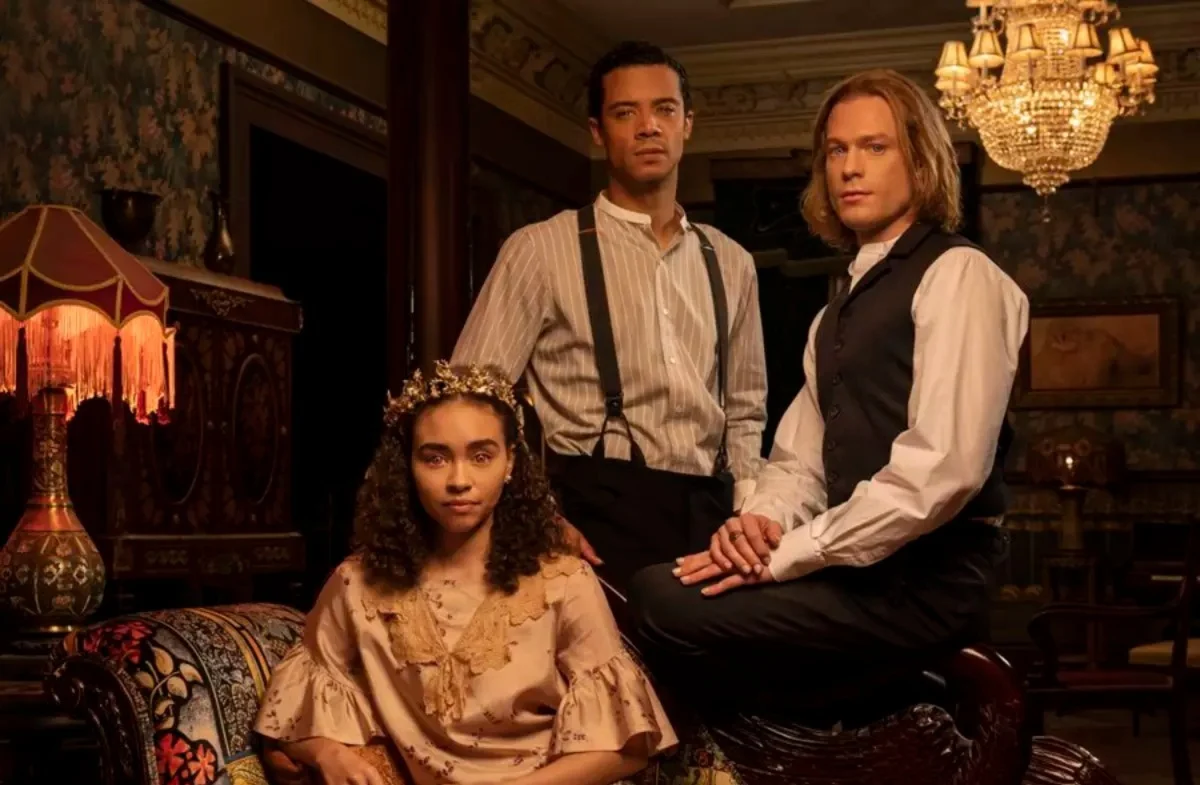
AMC has proven itself to have a strong creative vision by acquiring the rights to adapt Anne Rice’s extensive literary catalogue. The network has not only brought Interview with the Vampire to television, but has also significantly expanded the author’s universe through additional projects such as The Talamasca, which explores the more supernatural and investigative branch of The Vampire Chronicles.
This approach turns the adaptations into more than simple retellings. They function as an evolving narrative universe, closer to a television multiverse inspired by Rice’s original work.
The Vampire Lestat: the next major chapter
The third major installment in this expanded universe will be The Vampire Lestat. The series will focus on Lestat de Lioncourt, one of the most charismatic and morally complex characters in the saga.
The project is expected to raise the narrative scale even further, delving deeper into Lestat’s psychology, his artistic nature, and his role as both narrator and destabilizing force within the vampire world. Themes of identity, immortality, and moral contradiction are likely to take center stage once again.
Ongoing debate on adaptation choices
AMC’s adaptations have sparked a strong debate among fans of the original novels. One of the most discussed points is the casting choices, including the decision to cast Black actors in roles that were originally described differently in the books.
For some purists, these changes represent a departure from Anne Rice’s original vision, particularly in cases where physical description played a symbolic or atmospheric role in character construction.
Claudia as a key example
A central example in this discussion is Claudia. In the novels, she is described as a young girl with golden blonde curls, an image that contributes heavily to her unsettling contrast between childlike appearance and adult consciousness.
In the television adaptation, her visual portrayal differs, which alters part of that established literary iconography. Some viewers feel this changes the character’s aesthetic impact, while others argue that her emotional core and narrative tragedy remain intact regardless of appearance.
A reinterpretation rather than a strict adaptation
Despite the controversy, it is clear that Interview with the Vampire has taken a deliberate creative direction. Rather than adhering strictly to the source material, AMC has built an interpretation that develops its own internal continuity.
This allows the series to expand existing storylines, reshape character arcs, and explore new thematic angles while still drawing from Anne Rice’s foundational mythology.
Easter eggs and respect for the source material
One of the most appreciated aspects among long-time readers is the abundance of Easter eggs and subtle references to the novels. These details act as connective tissue between page and screen, rewarding fans who are familiar with the broader Vampire Chronicles lore.
At the same time, the series maintains enough independence to function as a standalone narrative experience.
A growing and evolving vampire universe
With the arrival of The Vampire Lestat, anticipation continues to build. The series is expected to further deepen AMC’s interpretation of Rice’s universe, continuing its expansion into a complex, interconnected narrative world.
Whether one views these adaptations as faithful or transformative, AMC has undeniably preserved the emotional intensity and gothic atmosphere that define The Vampire Chronicles, while simultaneously shaping a distinct creative identity for television.